A Moveable Feast
Van Aert claims Champs-Élysées glory after brutal attack on Montmartre | Pogačar takes his fourth Tour, the youngest rider in history to do so

Thank you for being on the other side of these Tour de France chronicles over the past three weeks. It’s been a joy to experience it both from home and from the heights of the Pyrenees. Most of all, heartfelt thanks to the dozens of paid supporters who make it possible for Cycling Report to keep moving forward and growing – with some exciting updates coming soon.
If you’re not yet a premium subscriber, now’s the perfect time to join. You can still take advantage of the free trial on the annual plan: the offer expires this Monday! There’s no better moment, and Cycling Report isn’t slowing down 😉
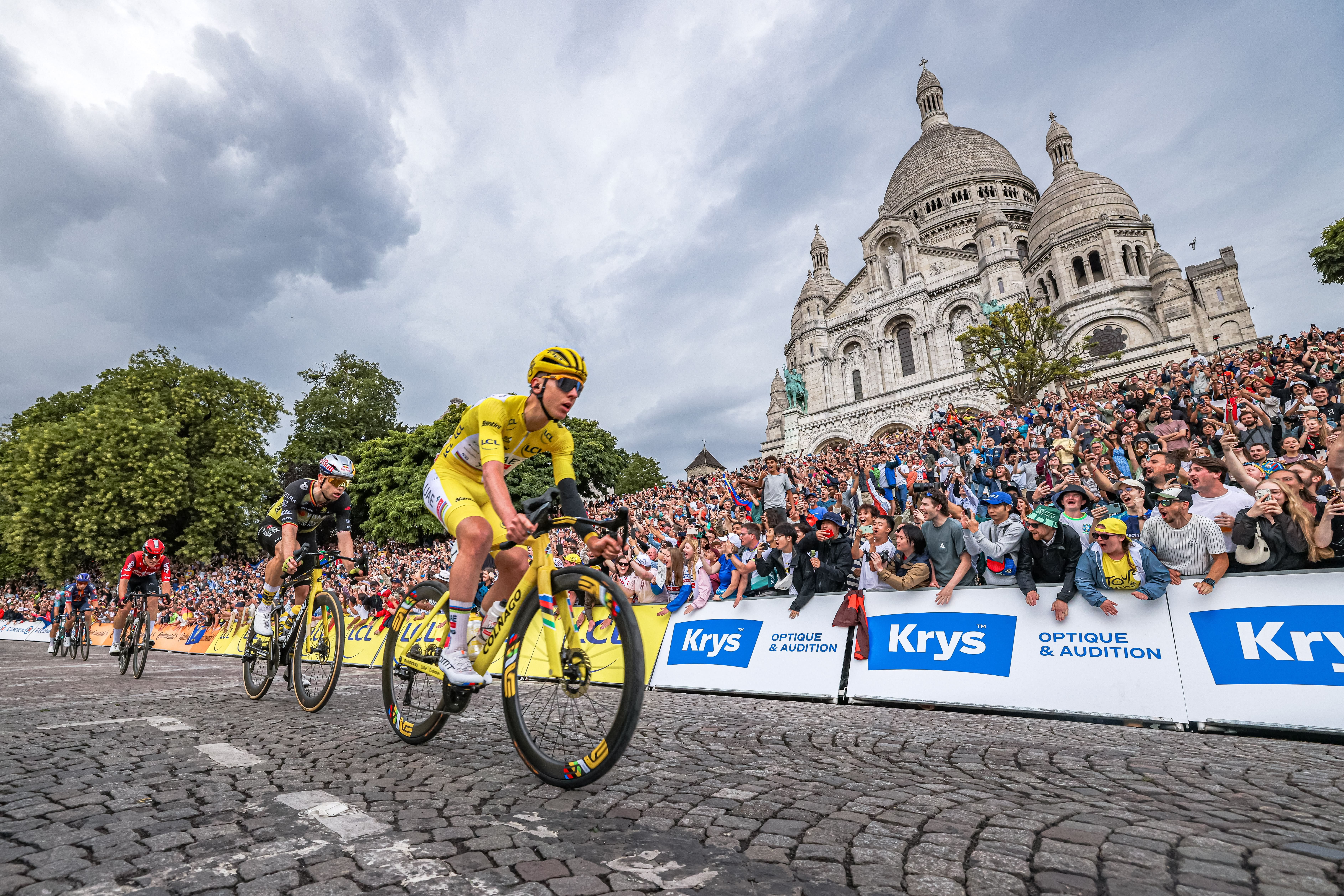
If the final stage in Paris was intended as an experiment with the triple ascent of Montmartre, ASO can consider it a resounding success. The crowds braved the rain, Pogačar joined the fight, Van Aert and Visma executed their plan, and fans at home enjoyed it as if it were a spring classic.
This tribute to Paris, to Hemingway, and to cycling felt like it deserved a permanent place on the route. But the risk of a crash spoiling the sport’s most prestigious podium remains. A return to the traditional route would likely prove unpopular, more comfortable for most riders… and perhaps less profitable for the organisers.
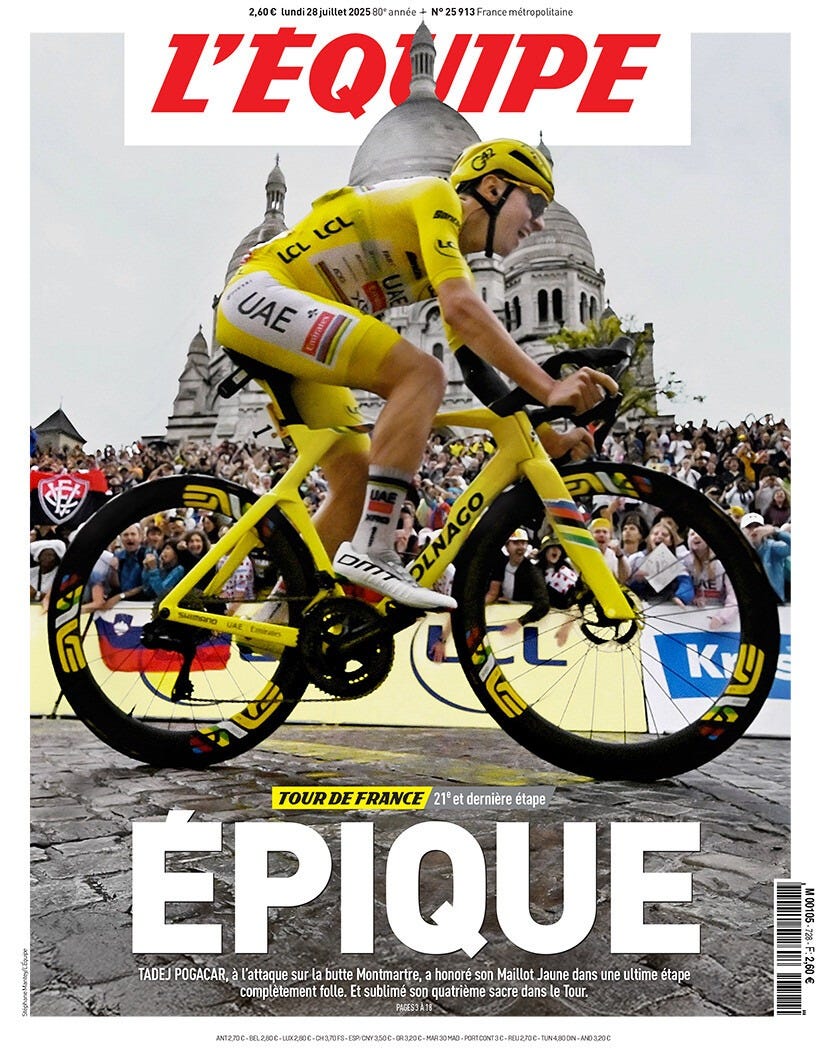
I enjoyed this final stage more than almost any other in this Tour, and I think it encapsulates the strengths of this edition rather well. A relentless pace, real ambition, big names, and a highly entertaining fight for nearly every stage win – in contrast to the GC battle, which, in truth, ended back on the Hautacam stage, when Pogačar effectively sealed the Tour with nine stages still to go.
This new route through the beautiful heart of Paris deserves praise. As does calling out the organiser’s stubbornness in stacking all the mountain days between stages 12 and 19.
It deprived us of a wider range of protagonists, varying form throughout the race, and bolder tactics – all limited at the end of the race by the sheer exhaustion brought on by the fastest Tour de France in history: 43.38km/h on average, over 1km/h quicker than the previous record set in 2022. Utter madness.
That record, like so many other things that happened, was partly down to Visma. They forced a hard, chaotic, tense race right from day one in Lille, and embraced the entropy, believing that only in disorder could the playing field be levelled against Pogačar’s obvious dominance. And they executed the plan superbly – right up until the first day in the mountains, when Soulor and then Hautacam delivered a decisive blow to the race.
A special mention must go to Vingegaard and Jorgenson’s underwhelming time trial in Caen – the reason behind their poor performance there remains unclear.
I still can’t quite understand, beyond fatigue, Visma’s passive approach after the Madeleine, or on the day of La Plagne. It was lacking in ambition and greatness – a resignation in the face of an impossible task.
And yet, maybe none of it would have mattered. A different strategy, a different route, different teammates… all likely irrelevant, because Pogačar is performing at a level we’ve never seen before in another cyclist. His palmarès can’t yet be measured against Merckx or Hinault – though it’s getting close – but his dominance since the start of 2024 has been nothing short of overwhelming.
In Paris, wearing the yellow jersey and as reigning world champion, Pogačar attempted to emulate Hinault in ’82 and arrive triumphantly on the Champs-Élysées.
He’d already tried something similar in 2022, but this time, with the triple passage over Montmartre’s cobbles, packed with fans, it felt far more within reach. Rain had led to GC times being neutralised, leaving the stage and its risks up to whoever fancied a go. And who else but him?